
The focus of the Systems Engineering Program (Systems) is understanding complex large-scale systems and developing tools for their design and operation. Such systems encompass built elements in the broad sense (infrastructures transportation, structures, etc.), societal systems (social networks, populations enterprises), and natural systems (land water, air). These systems are at the core of Civil and Environmental Engineering of the 21st Century.
The understanding of how such systems work requires knowledge about the constitutive laws that govern them, such as traffic flow, fluid mechanics, structural mechanics, and smart networks. It also requires an understanding of the theoretical paradigms that are used to model, control and optimize such systems. These include the theories of computation, control theory, optimization, behavioral economics, sensor networks, statistics, and signal processing.
In response to these challenges, the Systems Program provides courses that cover both field knowledge and technical/theoretical tools. This is reflected in the curriculum. We offer masters and doctoral degree programs providing the key skills, e.g., technological, mathematical, or social scientific, as well as the knowledge for a broad range of engineering domains. Our graduates lead the next generation of research, start-ups, industrial corporations, and public-sector organizations.
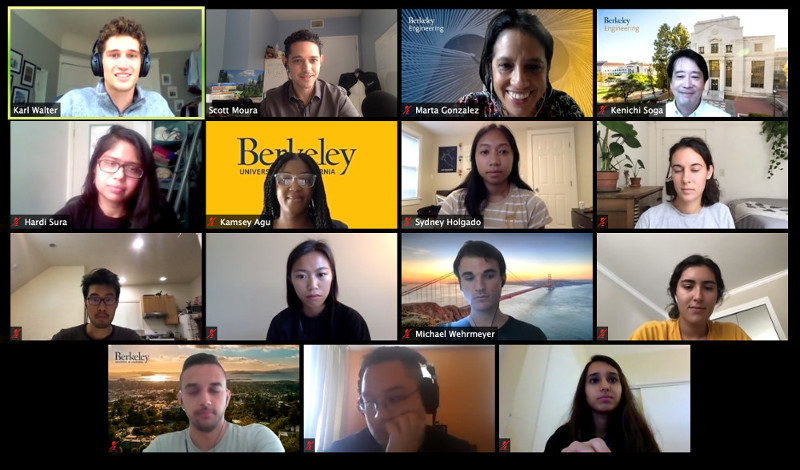
Systems Engineering Welcome Guide (Fall 2020-Spring 2021)
Our LIVE Welcome Guide provides critical information about the SYS program including advising, courses, orientation, graduation requirements, GSI/Reader opportunities, and more.
Degrees and Curricula
The Systems degree programs are flexible, and students can tailor their programs in consultation with a graduate adviser in any of a variety of areas of interest. Students have to get their curriculum approved by the Systems graduate adviser. Below are a few examples of the types of areas of interest that can be pursued.
- Computational Intelligence in Natural Systems
- Control Theory
- Energy Systems
- Intelligent Infrastructure
- Systems Reliability, Risk Assessment and Decision
- Intelligent Transportation Systems
- Mobile sensing
- Nano-seismology
- Smart Cities
- People in Complex Systems
- Water Informatics
This structure and its inherent flexibility enables our program to accommodate the needs of a fairly diverse population of students. Our students come from a wide variety of backgrounds: civil, mechanical and electrical engineering; physics, mathematics, computer sciences, architecture, economics, aerospace, and more. Our graduates have gone on to leading positions in green consulting firms, various start-ups, NASA, companies such as Apple, Facebook, IBM, and Google, and major universities such as MIT, University of Michigan, University of Illinois, Georgia Tech, Purdue, Texas A&M.